
With the arrival of colder weather, enjoying outdoor spaces can seem like a challenge. However,…
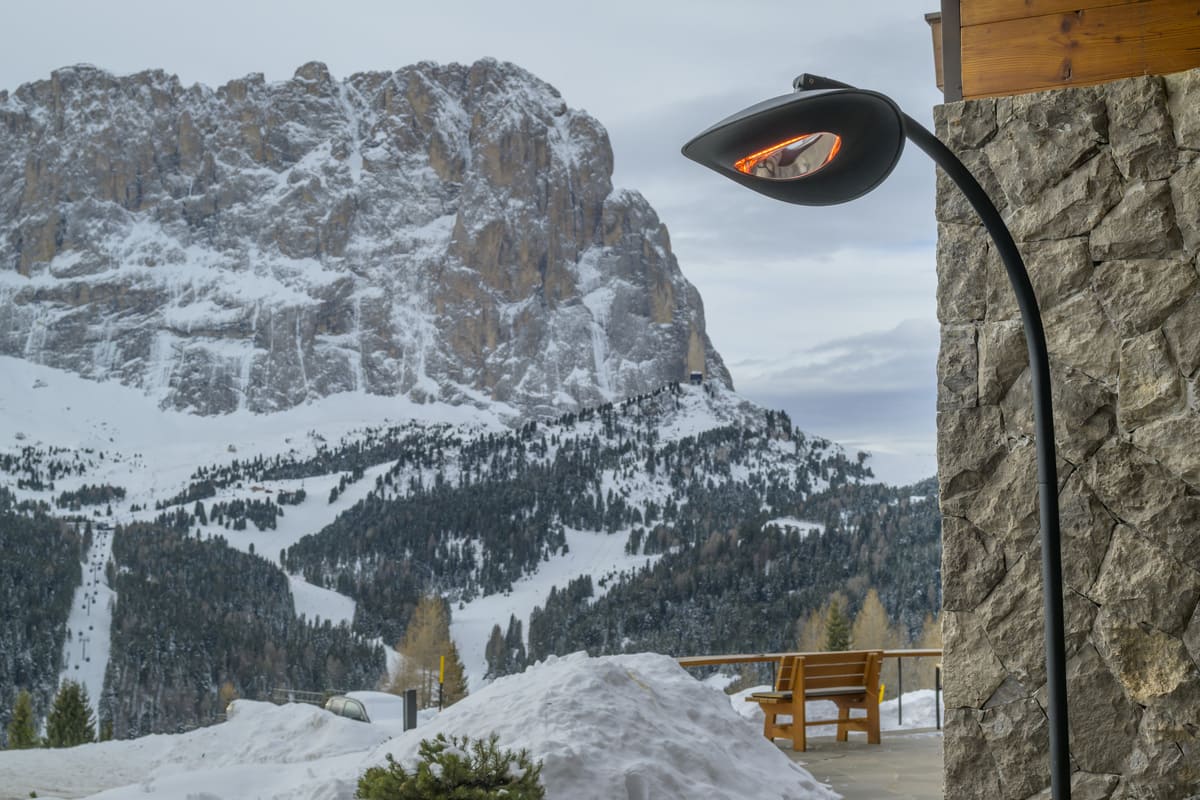
Why Choose a Infrared Heating Lamp: Benefits, Energy Consumption, and Practical Tips
Choosing the most suitable heating system for your spaces, especially when it comes to outdoor or semi-open areas, is never an easy task. In recent years, however, the infrared heating lamp has established itself as one of the most efficient, versatile, and sustainable solutions, becoming a go-to option for those who want to maintain consistent thermal comfort without wasting energy. From home terraces to outdoor seating areas in bars and restaurants, as well as verandas, patios, and professional spaces, infrared lamps are gaining popularity thanks to their ability to provide immediate, even, and targeted warmth exactly where it’s needed.
Unlike traditional gas or hot-air systems, an infrared heating lamp doesn’t heat the air but the surfaces, people, and objects within a space. This translates into greater efficiency, less heat loss, and faster perceived comfort, even in windy or cold conditions. Additionally, modern models designed for both home and professional use combine refined design, low energy consumption, and durable materials, making them a long-lasting, aesthetically pleasing, and functional investment.
Another reason why more and more people are turning to this technology is energy consumption. Understanding how much energy is required, optimizing the lamp’s use, and adopting small measures to reduce waste not only helps lower electricity bills but also allows for a more environmentally conscious choice.
In this article, we will take a clear and detailed look at why you should choose an infrared heating lamp, the real benefits it offers, how it performs in terms of energy consumption, and practical tips to achieve optimal results. This guide is useful both for those looking to heat a domestic outdoor corner and for those seeking an elegant, safe, and efficient professional solution.
How an Infrared Heating Lamp Really Works
To understand why more and more people are choosing an infrared heating lamp, it helps to start with how it works. Unlike traditional heating systems that warm the surrounding air, infrared lamps use a completely different mechanism inspired by the natural heat of the sun. Infrared is a form of electromagnetic radiation that, when it hits a surface, is absorbed and converted into heat. This means the technology doesn’t waste energy heating unnecessary volumes of air, but focuses warmth directly on people, furniture, and objects in the space.
An infrared heating lamp emits infrared waves of varying wavelengths, each with specific characteristics. The most commonly used for space heating are short and medium-short waves, as they provide immediate, perceivable warmth even in outdoor or ventilated environments. This allows for instant comfort without waiting for the air temperature to rise.
The system works through an electric resistance that, once powered, reaches high temperatures and generates infrared radiation. Reflectors are designed to direct this radiation, optimizing heat distribution toward the area to be heated. Advanced models combine high-efficiency materials, quartz or carbon lamps, and thermal control systems that allow precise adjustment of intensity and energy consumption. One of the main strengths of this system is the absence of air movement: it doesn’t lift dust, create humidity, or lose heat when doors or windows are opened. This makes infrared lamps ideal for terraces, patios, and semi-open spaces. In short, an infrared heating lamp works in a simple yet highly efficient way, providing direct, fast, and targeted warmth that ensures comfort even under challenging conditions.
Key Benefits of Infrared Heating
Infrared heating offers numerous advantages over traditional systems, making it increasingly popular for both residential and professional spaces. One of its main benefits is immediate, targeted warmth: unlike systems that heat the air, an infrared heating lamp transfers heat directly to surfaces and people, providing instant comfort and a more natural feeling of warmth without long preheating times. Another major advantage is energy efficiency. By concentrating heat only where it’s needed, energy waste is minimized, resulting in significant savings on electricity bills. Many modern models also allow adjustment of power and heat direction, adapting perfectly to the size and layout of the space. This makes infrared heating especially suitable for outdoor areas like terraces, verandas, or restaurant patios, where conventional convection heating would quickly dissipate.
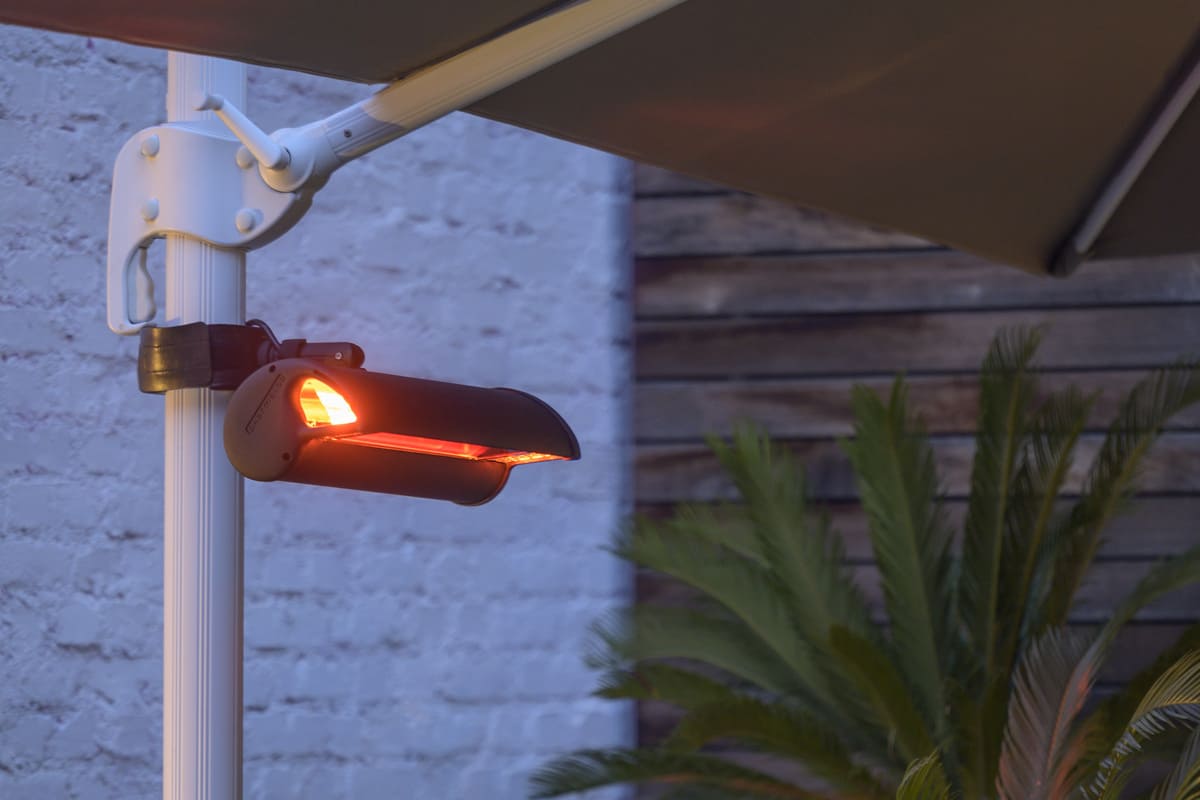
Versatility is another key feature. Infrared heating lamps come in various forms and designs, from wall-mounted or ceiling units to freestanding models, allowing seamless integration into any setting without compromising aesthetics. They are also quiet, low-maintenance systems: no tanks, pipes, or noisy fans are required, and only periodic cleaning is needed to maintain optimal performance.
Finally, infrared heating is safe and sustainable. It produces no harmful emissions, dust, or fumes and is suitable for sensitive individuals, including children and the elderly. The combination of instant comfort, efficiency, versatility, and safety makes the infrared heating lamp a modern, practical, and responsible solution for enjoying warmth without compromise.
Energy Consumption: How Much Does an Infrared Heating Lamp Affect Your Bill?
When it comes to heating, one of the most important factors for homeowners, terrace owners, or business operators is undoubtedly energy consumption. Infrared technology stands out not only for its efficiency and immediate comfort but also for its ability to reduce energy costs compared to traditional systems. To better understand the economic impact, consider heating a 10 m² space for six hours a day. With a Phormalab infrared heating lamp, warmth is delivered directly to surfaces and people in the area, avoiding waste associated with heating the air. In this scenario, energy savings compared to a conventional system are significant: estimated monthly savings are around €276 per heater, reaching nearly €2,000 over seven months.
This advantage is mainly due to the different method of heat transfer. Conventional heaters take longer to bring a room to the desired temperature and lose much of the energy into the surrounding environment. In contrast, Phormalab infrared heating lamps reach the ideal temperature almost instantly, consuming only the energy necessary for targeted heating.
Beyond economic savings, using infrared lamps also contributes to a lower environmental impact by reducing CO₂ emissions related to energy consumption. Thanks to their efficiency, speed, and precision, Phormalab lamps represent an intelligent choice for anyone seeking immediate comfort while keeping energy costs under control without sacrificing quality. Evaluating energy consumption and comparing different heating options is therefore essential: choosing an infrared heating lamp means making an efficient, economical, and sustainable decision with a noticeable return in just the first few months of use.
How to Choose the Infrared Heating Lamp That Best Suits Your Needs
Choosing the right infrared heating lamp isn’t just about power or energy consumption; the type of installation and the space to be heated are equally important. The lamp’s placement affects heat effectiveness, perceived comfort, and safety, making it essential to determine which type is best suited to your situation.
Common options include wall-mounted lamps, ideal for narrow terraces, balconies, or small spaces. They direct heat exactly where it’s needed without taking up floor space. This installation is stable, discreet, and leaves the floor free for furniture or foot traffic. Another option is ceiling-mounted lamps, perfect for larger areas or for those who prefer a clean, minimalist design. Ceiling lamps evenly heat the space below and reduce the risk of accidental bumps while creating an elegant, integrated visual effect.
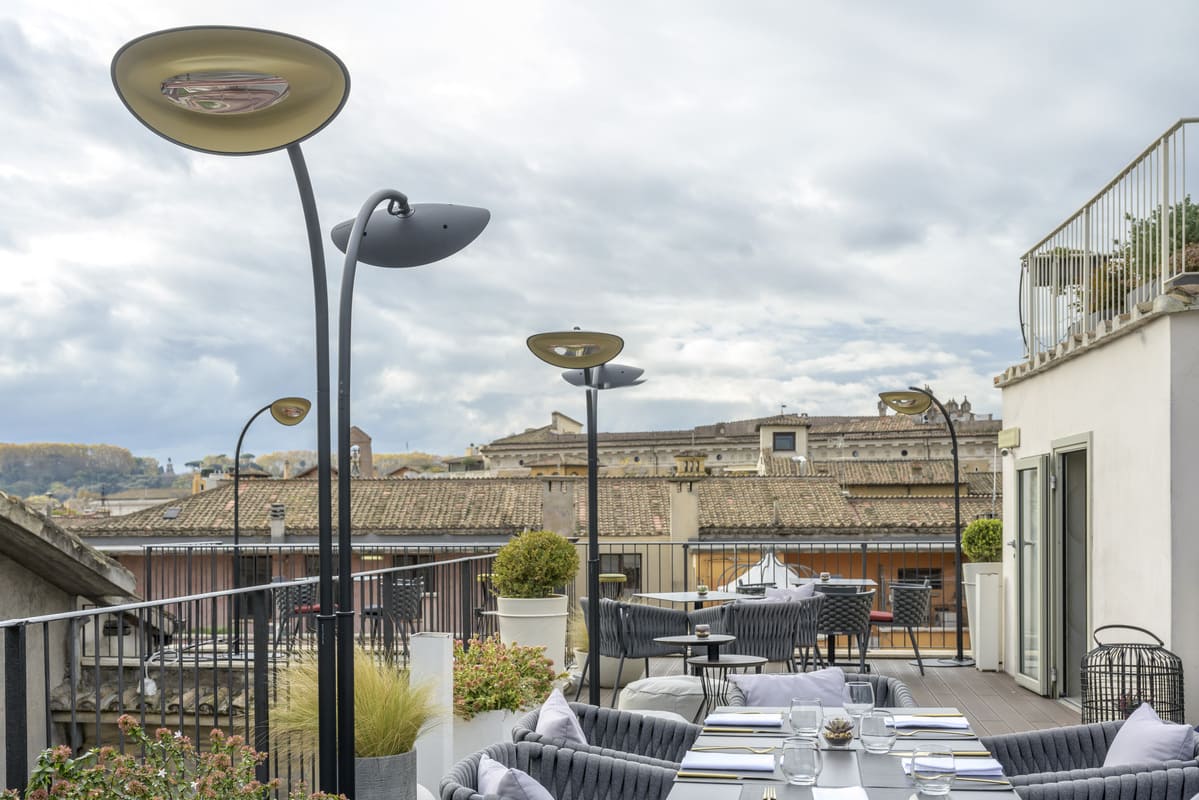
For more flexible solutions, single freestanding lamps can be easily moved to heat different areas as needed, making them ideal for restaurant patios or spaces with frequently changing layouts. For larger areas requiring intense, uniform heating, double freestanding lamps combine two units in a single stand, doubling the effect and covering larger surfaces. Beyond installation type, it’s important to consider height, tilt angle, and required power relative to the area being heated. Other factors include weather resistance, ease of maintenance, and material safety. Choosing the right infrared heating lamp means balancing efficiency, aesthetics, and practicality to ensure comfortable, long-lasting warmth in any setting.
Related Posts
 WhatsApp