
For many years, outdoor heating lamps were mainly considered functional devices, used to make terraces,…
Infrared Heaters: How Infrared Heating Works and What Its Benefits Are
Infrared heaters are becoming an increasingly popular solution for heating spaces in a practical and modern way. Mainly used to heat outdoor areas such as terraces, gardens and outdoor seating areas, they allow people to spend more time outdoors even when temperatures become less pleasant. But how does infrared heating work, and what advantages does it offer compared to other heating solutions?
To understand how an infrared heater works, it is important to start with the technology behind it. Unlike systems that primarily heat the air, infrared heating transfers energy directly to people and surfaces reached by the radiation, generating a pleasant feeling of warmth. This principle allows you to feel the heat without necessarily having to wait for all the surrounding air to reach a certain temperature.
One of the main advantages of infrared heaters is their ability to create comfortable areas in open or partially exposed spaces, where heat tends to dissipate more easily. Other benefits include ease of use, various installation options and the availability of models that combine functionality with aesthetics. Infrared heaters can become genuine design features, blending seamlessly with the style of private homes, restaurants, hotels and commercial premises.
Naturally, choosing the most suitable solution requires considering several factors, including the area to be heated, installation position, power output and the type of environment in which the heater will be used.
In this article, we will explore how infrared heating works, its main advantages and which features to consider before purchasing. This useful guide will help you better understand the technology and identify the infrared heater that best suits your needs, without compromising on comfort or design.
How an Infrared Heater Works and Produces Heat
Infrared heaters use technology that generates heat through the emission of infrared radiation. To understand how an infrared heater works, it is important to consider how this energy is transferred to the surrounding environment. When the device is switched on, the heating element converts electrical energy into infrared radiation, which directly reaches people and surfaces within its coverage area.
Unlike systems that primarily aim to heat the air, infrared heating allows warmth to be felt directly on the skin and on objects reached by the radiation. In some respects, this principle is similar to the feeling of warmth experienced when exposed to sunlight on a cool day. Naturally, the effect depends on the heater’s power output, distance, orientation and environmental conditions.
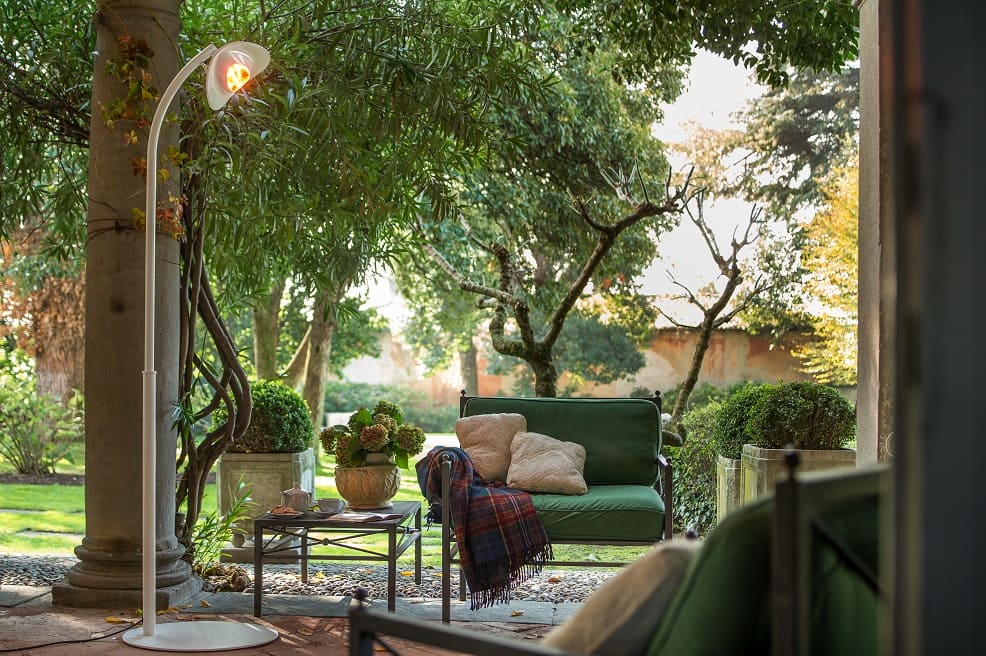
This characteristic makes infrared heaters particularly interesting for outdoor or semi-open spaces, such as terraces, balconies, verandas and outdoor seating areas at bars and restaurants. In these settings, heating all the surrounding air can be ineffective, especially when there is a draught. A correctly positioned infrared heater, on the other hand, allows heat to be concentrated in the desired area. Installation also contributes to the overall result: wall-mounted, ceiling-mounted and freestanding models make it possible to adapt the heating to the layout of the space and specific requirements. To achieve a good level of comfort, it is important to consider the power output, mounting height and area to be heated.
Infrared Heaters: All the Benefits and Uses
Choosing an infrared heater means opting for a practical, versatile solution suitable for a variety of settings. Thanks to the operating principle of infrared technology, heat is transferred directly to people and surfaces reached by the radiation, helping to create a feeling of comfort without necessarily having to heat all the surrounding air.
One of the main advantages is how quickly warmth can be felt after switching the heater on. This feature is particularly useful in outdoor spaces, where temperatures can change rapidly and maintaining constant thermal conditions is not always possible. Terraces, balconies, covered patios and verandas can become more enjoyable spaces, even during the transitional seasons or on cooler days.
Infrared heaters are also widely used in the restaurant and hospitality sectors. Bars, restaurants and hotels can use them to improve guest comfort in outdoor areas, making terraces and outdoor seating areas more usable. In residential settings, they offer an interesting option for those who want to make greater use of their garden or balcony without necessarily installing more complex heating systems.
Another aspect to consider is the variety of models available. Wall-mounted and ceiling-mounted versions keep floor space clear, while freestanding heaters offer greater flexibility in positioning. Designer models can also blend with the surrounding furnishings and contribute to the aesthetic identity of the space.
To properly assess the benefits, it is also important to consider power output, the area to be heated and environmental conditions. Proper installation allows you to make better use of the available heat, while choosing a high-quality model helps combine functionality, durability and attention to design.
How to Choose an Infrared Heater Based on Your Space and Needs
Choosing the most suitable infrared heater means carefully evaluating the space to be heated, how frequently it will be used and the desired result. Not every situation requires the same solution: a private terrace, a restaurant’s outdoor seating area or a home’s covered patio all have different requirements that should be considered before purchasing.
The first factor to evaluate is the heater’s power output. This should be selected according to the area to be heated, the distance from people and environmental conditions. In outdoor spaces, for example, wind exposure and the arrangement of furniture can affect how warmth is perceived. For this reason, positioning is also essential: installing the heater in the right location helps direct infrared radiation towards the areas where comfort is most needed.
Another aspect to consider is the type of installation. Wall-mounted heaters are suitable when you want to make use of vertical surfaces, while ceiling-mounted versions allow you to keep the space below clear. Freestanding solutions, on the other hand, offer greater flexibility in positioning. In addition to functionality, it is worth considering materials, colours and shapes, especially when the heater needs to blend into an interior or outdoor design project.
It is precisely this combination of technology and aesthetic attention that defines Phormalab infrared heaters, designed and manufactured in Italy. The brand offers infrared heating solutions developed to warm outdoor spaces without compromising on design, with models suitable for both residential environments and the hospitality sector. Collections such as Hotdoor and Aura demonstrate how an infrared heater can also become a distinctive feature of its surroundings.
For those looking for a solution that combines thermal comfort, attention to detail and Made in Italy manufacturing, Phormalab infrared heaters are an option worth exploring, taking into account the characteristics of the space and individual heating requirements.
Related Posts

 WhatsApp